
FACTS COMBUSTION TECHNOLOGY
Facts about combustion technology
About combustion technology, chemical reactions during combustion and how flue gas analysis gives you a good basis for optimal adjustment of your combustion plant.

The aim of combustion is to generate the maximum possible energy in relation to the fuel supplied. At the same time, the least possible amount of emissions in the form of nitrogen oxides, sulphur oxides, hydrocarbons, etc. must be produced.
In order to determine the performance of a combustion plant, it is necessary to analyze the gases produced and remaining after combustion, usually oxygen (O2) and/or carbon dioxide (CO2) and carbon monoxide (CO). By far the most common emissions measured are the nitrogen oxides (NOx), but depending on the fuel and the plant, the sulfur oxides (SOx) and hydrocarbons are also common measurement parameters.
The temperature of the flue gas is also important to measure as it is an important factor in calculating the efficiency of the plant and to avoid condensation in chimneys.
The chemical reactions during combustion.
Combustion involves a large number of chemical reactions. The most important from an energy point of view is the reaction between the carbon in the fuel and the oxygen in the air, resulting in carbon dioxide in the flue gases. In addition, depending on the fuel, the reaction between the hydrogen in the fuel and the oxygen in the air. In natural gas, for example, the hydrogen content is quite high, whereas it is relatively low in biofuels.
The issues
Combustion also produces some environmentally harmful emissions, the most common of which are nitrogen oxides (NOx). These are normally formed at high combustion temperatures and consist of approx. 95% NO and 5% NO2. Depending on the fuel and plant, different levels of sulphur oxides, hydrogen sulphide and hydrocarbons are also formed.
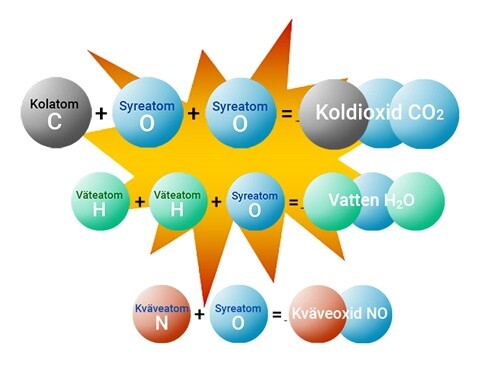
Incineration.
Theoretically perfect combustion (stoichiometric) means that all the oxygen in the air is consumed in combustion and no oxygen, carbon or hydrogen remains in the flue gases.
Since the world of atoms is sparse, a greater number of oxygen atoms are needed in the supply air (excess air) than will be needed during combustion for all carbon and hydrogen atoms to find an oxygen atom. To achieve optimal combustion, it is therefore important to mix fuel and air in the right proportions.
Too little air results in incomplete combustion with high carbon monoxide levels and possible soot formation.
Too much air means that “you are burning for the crows”, i.e. the hot flue gases are not fully utilized in the heating system. In addition, combustion is impaired as the flame cools and the carbon monoxide content increases.

Flue gas analysis.
The only way to make an optimal adjustment of a combustion plant is to measure the different components of the flue gases with a flue gas meter. These basically have measuring cells to analyze oxygen (O2) and carbon monoxide (CO) and a sensor with a thermocouple for temperature measurement. This equipment is sufficient to determine the combustion efficiency of the plant. For slightly larger boilers, it is usually also necessary to analyze the nitrogen oxides (NOx). For most instruments, an NO measuring cell is available as an option. The larger instruments also have measuring cells for other emissions such as sulphur oxide, hydrocarbons, hydrogen sulphide, etc.
The calculations
Most of the parameters used to determine the performance of a plant are calculated from the measured values such as carbon dioxide (CO2), nitrogen oxides (NOx), efficiency, flue gas losses and excess air.


Flue gas measuring analyzers from Nordtec.
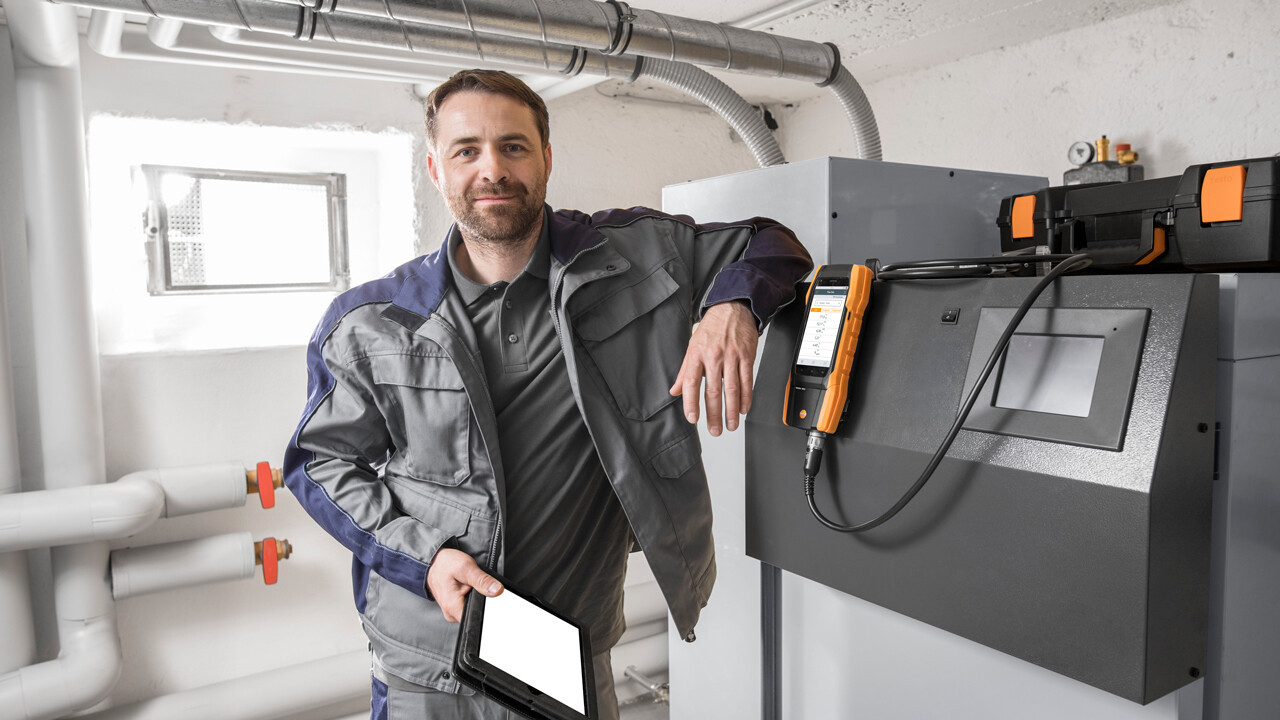
Entry-level models
testo 300 Basic is a modern and competent flue gas meter that meets all basic measurement requirements normally needed for smaller boilers. Measures O2, CO and temperature and calculates CO2, efficiency etc.
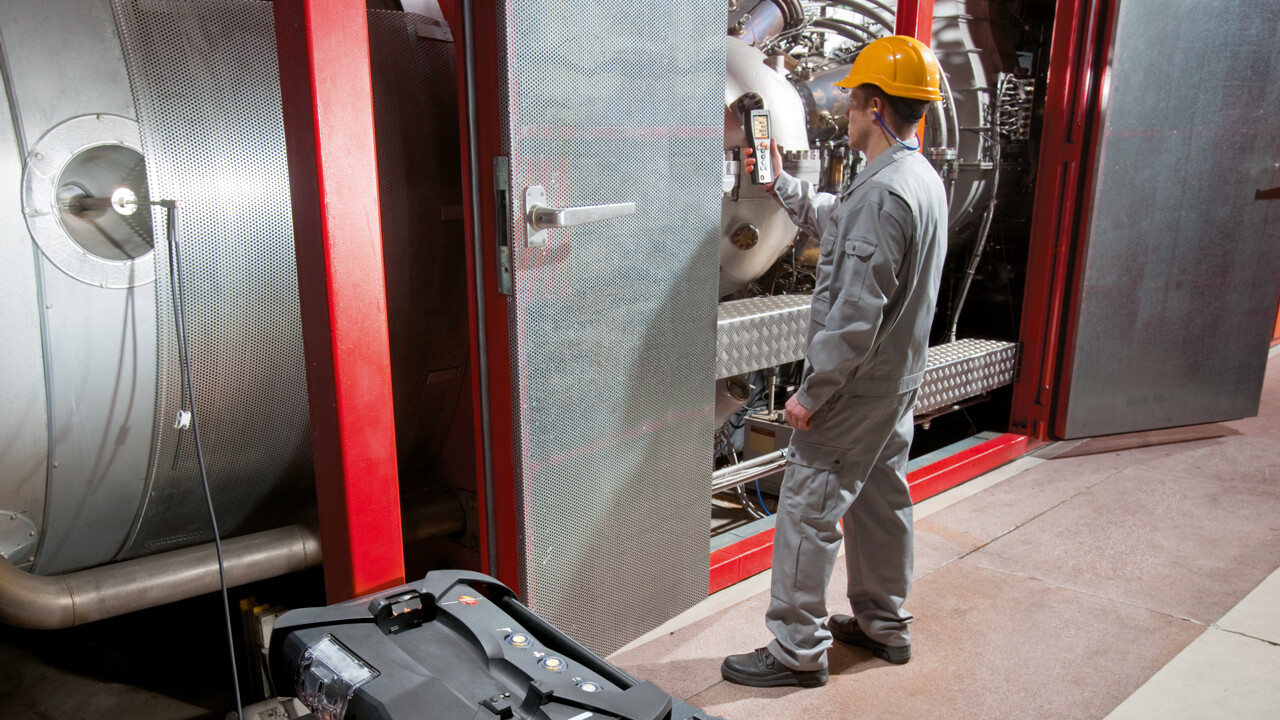
Industrial class
The testo 340 and 350 instruments are primarily intended for larger industrial boilers, turbines and diesel engines where emissions are particularly important to analyze. They can also log measurement data over time.

