


Published 2026-11-03
When measurement data becomes the key to lower energy costs
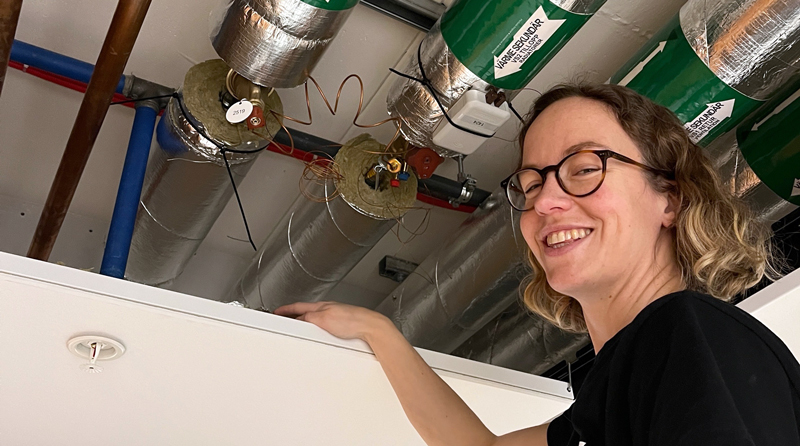
Optimizing energy use in a building is not just about tracking consumption. Understanding why it changes is just as important. For CBRE’s energy specialists, connected monitoring is therefore an important tool when property owners need to identify anomalies, improve the indoor climate or gain better control over their energy use.
Boguslawa Chittleborough is an energy specialist at CBRE and part of a team that helps property clients monitor energy use and recommends measures when needed.
“We review energy consumption monthly and follow up on any anomalies, for example if consumption suddenly rises significantly,” she says.
Three paths to deeper analysis
CBRE’s energy team primarily helps property clients in three scenarios. The first is the continuous monitoring of clients’ energy monitoring systems and BMS systems (supervisory building automation systems). By tracking energy consumption, the energy specialists can detect anomalies and investigate their causes. Energy optimization and improvement recommendations are included in CBRE’s operations contracts.
An anomaly may be caused by an incorrect reading, for example, but it may also indicate an actual problem in the building, such as a water leak.
The second scenario is when property owners or tenants experience problems with the indoor climate. The premises may be too cold, too warm or feel stuffy.
The third is when the property owner wants to check how the building is actually performing and update or verify its energy performance certificate. Does energy consumption still match the figure on paper? If not, what is causing the difference, and what measures could reduce consumption?
“Thanks to the Celsicom loggers, we had it in black and white. The measurements were an excellent verification tool.”

Kim Edoff
Energy Manager, CBRE
Measurements revealed an overventilated building
Clues can often be found in the client’s building automation system. If the cause cannot be identified there, CBRE speaks with local building technicians and takes additional measurements if necessary. CBRE’s field staff then use wireless, connected measurement products from Celsicom.
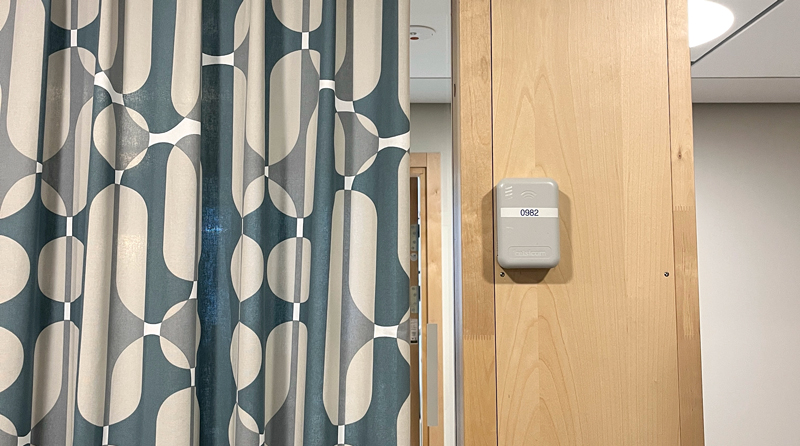
Some time ago, a property owner contacted CBRE after tenants complained about poor air quality. CBRE installed Celsicom meters to measure carbon dioxide levels, among other things. The result was unexpected: levels were lower indoors than outdoors. The premises were simply overventilated, resulting in extremely dry air.
“When we arrived, we immediately noticed that the air was dry. We could feel it in our throats after just a short time. Thanks to the Celsicom loggers, we had it in black and white. The measurements were an excellent verification tool,” says Kim Edoff, Energy Manager at CBRE.
Fan running backwards increased costs
The overventilation also affected energy use. In winter, the heating system had to heat large volumes of incoming outdoor air, increasing energy consumption. In summer, warm, humid air was blown in, creating a poor working environment.
The cause turned out to be an exhaust fan running in the wrong direction. This effectively doubled the supply air and created significant positive pressure in the building. After a technician reversed the fan’s direction, CBRE was able to remotely monitor both carbon dioxide levels and energy consumption. The readings stabilized, and the client gained a better indoor climate and lower energy consumption.
“The client was really pleased that we found and solved the problem quickly,” says Kim Edoff.
From temperature monitoring to Legionella
Temperature deviations are the most common reason CBRE needs to take additional measurements. One recurring example is checking the hot water circulation system, where the supervisory control system usually only shows the water temperature as it returns to the heating substation.
To ensure that hot water remains at the correct temperature throughout the building, CBRE measures the temperature at several points in the circulation system.
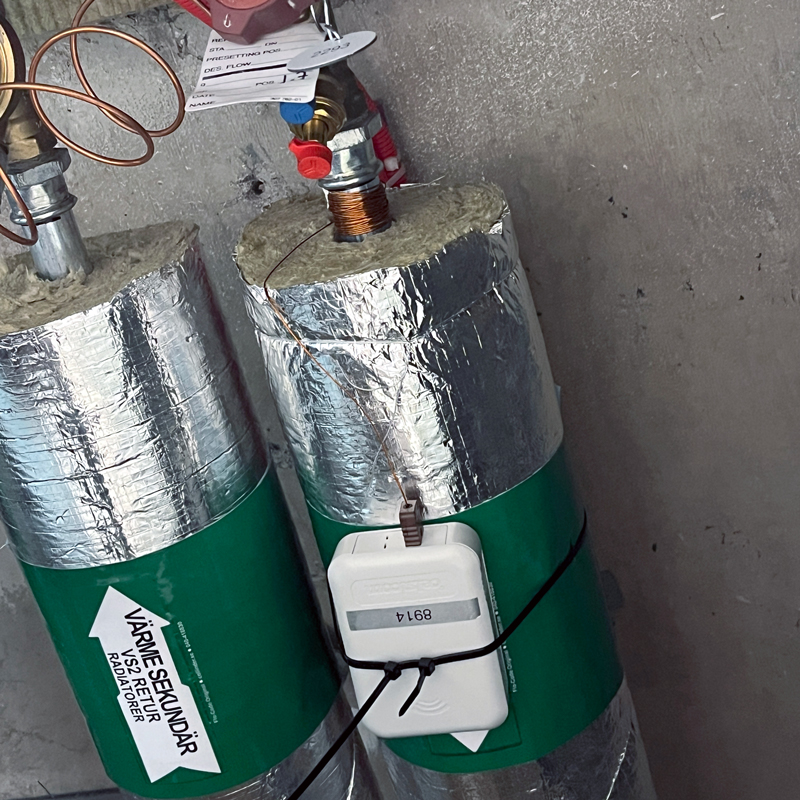
Legionella bacteria thrive particularly well in lukewarm water. Hot water should therefore be at least 50 °C at the point of use.
“Between 35 and 45 °C is a real paradise for Legionella,” says Kim Edoff.
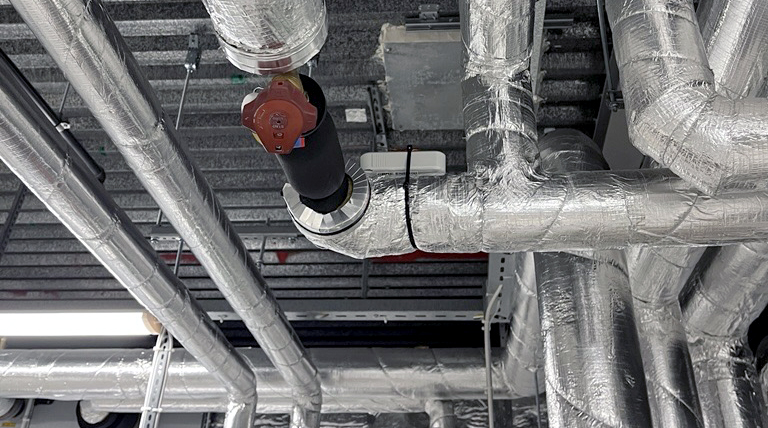
By placing loggers at critical points, CBRE can check that the temperature remains at the correct level. In one case, around 20 Celsicom loggers were installed. The measurements showed temperatures between 37 and 47 °C, providing important information for the property owner’s subsequent remedial work.
“What we appreciate most is the Celsiview cloud service. All the readings are quickly available in Celsiview once the loggers have been installed and activated.”

Boguslawa Chittleborough
Energy Specialist at CBRE
Current measurement data directly in the cloud
A major advantage of the Celsicom system is that measurements can be taken without extensive installation work, and current measurement data quickly becomes available remotely.
“What we appreciate most is the Celsiview cloud service. We work at different operations offices and have a perfect overview of our clients’ systems without having to retrieve meters and download data. All the readings are quickly available in Celsiview once the loggers have been installed and activated,” says Boguslawa Chittleborough.
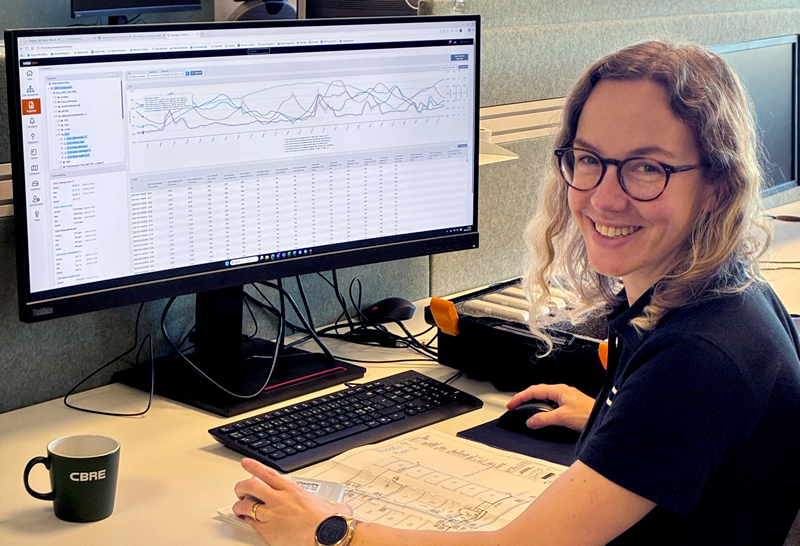
Kim Edoff agrees and describes an assignment for a logistics company in western Sweden, where CBRE was tasked with measuring the thermal indoor climate in premises converted from a warehouse to a production facility.
“I was able to prepare all the Celsicom loggers for commissioning from Stockholm and hand them over to a project manager, who went and installed them at the client’s site. We received measurement data immediately, without time-consuming cabling or complicated connections. That’s what I like about Celsicom: it’s a convenient, well-functioning measurement system.”

Connected monitoring with Celsicom.
With Celsicom, you can remotely monitor temperature, humidity, pressure and CO₂. The data loggers automatically send measurement data over the cellular network to the Celsiview cloud service, where you can monitor current readings, receive alarms when values deviate and create reports. A flexible solution for better control over climate conditions and measurement data in your buildings and other environments.
CBRE
Business: CBRE is a global commercial real estate services and consulting firm. In Sweden, the company has offices in Stockholm, Gothenburg and Malmö. Energy optimization is an important part of its Property Management business. CBRE’s energy team continuously monitors energy use, reports anomalies, investigates potential causes and develops recommendations to help clients reduce their energy consumption.
Measurement solution: Data loggers from the Celsicom measurement system are used as needed to check water temperatures in circulation systems and air quality in buildings. The loggers are installed at the client’s site, and CBRE’s energy specialists remotely monitor and analyze all current readings via the Celsiview cloud service.
Related customer stories
Indoor climate
Climate monitoring in highly sensitive environments
Celsicom enables perfect alignment of temperatures
Damage assessments with Celsicom
Contact persons

CUSTOMER SERVICE AND SALES
Mats Landin
Area of responsibility: Ventilation, Construction, Indoor climate
mats.landin@nordtec.se
031-704 10 79
031-704 10 70