


Published 2026-09-30
Get reliable results when measuring moisture in concrete
Measuring the moisture level in concrete is important in several different contexts, both in new construction and in existing buildings. This may involve checking that the concrete is sufficiently dry before applying a new surface layer, investigating conditions in cases of suspected moisture problems, or monitoring how moisture levels change over time.
At the same time, moisture measurement in concrete is not always as simple as placing a probe and reading a value. How the measurement is performed, the measurement depth used, and the conditions prevailing at the time of measurement can all affect the result.
Why measure moisture in concrete?
After casting, the moisture needs to be able to dry out, but the speed at which this happens depends, among other things, on the composition of the concrete, the thickness of the structure, and whether the concrete can dry in one or more directions. If a moisture-sensitive material is installed before the concrete is sufficiently dry, it can have consequences for the finished structure. Therefore, the moisture level needs to be assessed before deciding whether the work should proceed to the next stage in the construction process.
Even in older structures, there may be reason to check moisture conditions, for example during renovation, changes in building use, or when moisture damage is suspected.
What affects the measurement result?
Placement of measurement points
Moisture conditions in a concrete structure are not necessarily the same everywhere, which makes the placement of measurement points important. The placement and number of measurement points need to be adapted to the structure and the purpose of the measurement. When measuring according to the RBK method, there are guidelines for the placement of measurement points.
Choose the correct measurement depth
The relevant measurement depth depends, among other things, on whether the structure dries from one or two sides.
|
One-sided drying |
40% of the structure’s thickness, for example in the case of a slab on grade or permanent metal decking. |
|
Two-sided drying |
20% of the structure’s thickness. |
|
Filigree slabs with topping |
25% of the total structural thickness when the topping has a higher w/c ratio than the filigree slab. |
Prepare the measurement hole
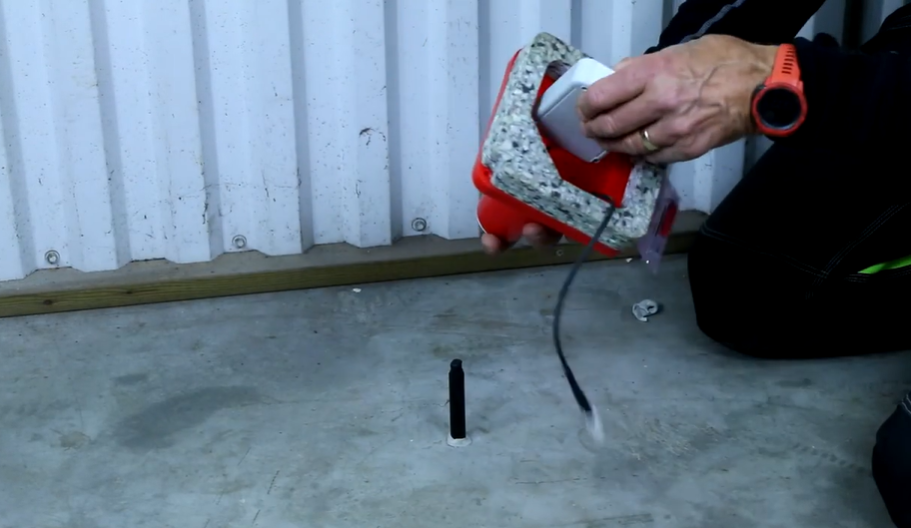
Drill cuttings and dust must be carefully removed, and the measurement tube must be installed so that the measurement is sealed. Details such as the placement of the O-ring and ensuring the probe is clean are also important. Dirt, drill cuttings, or a faulty seal can affect the measurement result.
Monitor the temperature
Temperature changes can affect moisture conditions and thus the measurement. Therefore, ensure that the ambient temperature is stable. The probe should also not be colder than the concrete when it is installed, as condensation on the probe can affect the measurement.
Wait until the measurement value has stabilized
After installation, the probe needs time to reach equilibrium with the air in the measurement hole. For RBK measurements, readings should be taken no earlier than 12 hours for concrete with w/c ratio ≥ 0.4 and after 48 hours for concrete with w/c ratio < 0.4.
Document the measurement
To be able to assess and follow the measurement results, the measurement must be documented. In addition to the RH value itself, it is relevant to note, for example, temperature, date, time, and measurement point. Documentation makes it easier to compare measurements over time and provides a basis for deciding on the next step in the construction process.
Step-by-step moisture measurement in concrete
To show how moisture measurement in concrete is performed in practice, we have enlisted the help of Kim Olmås, a moisture expert and building doctor with about 20 years of experience in moisture measurement and management.
In the videos below, Kim shows step-by-step how to measure moisture in concrete using two different measuring instruments. He also goes through what is important to consider to achieve reliable measurement results.

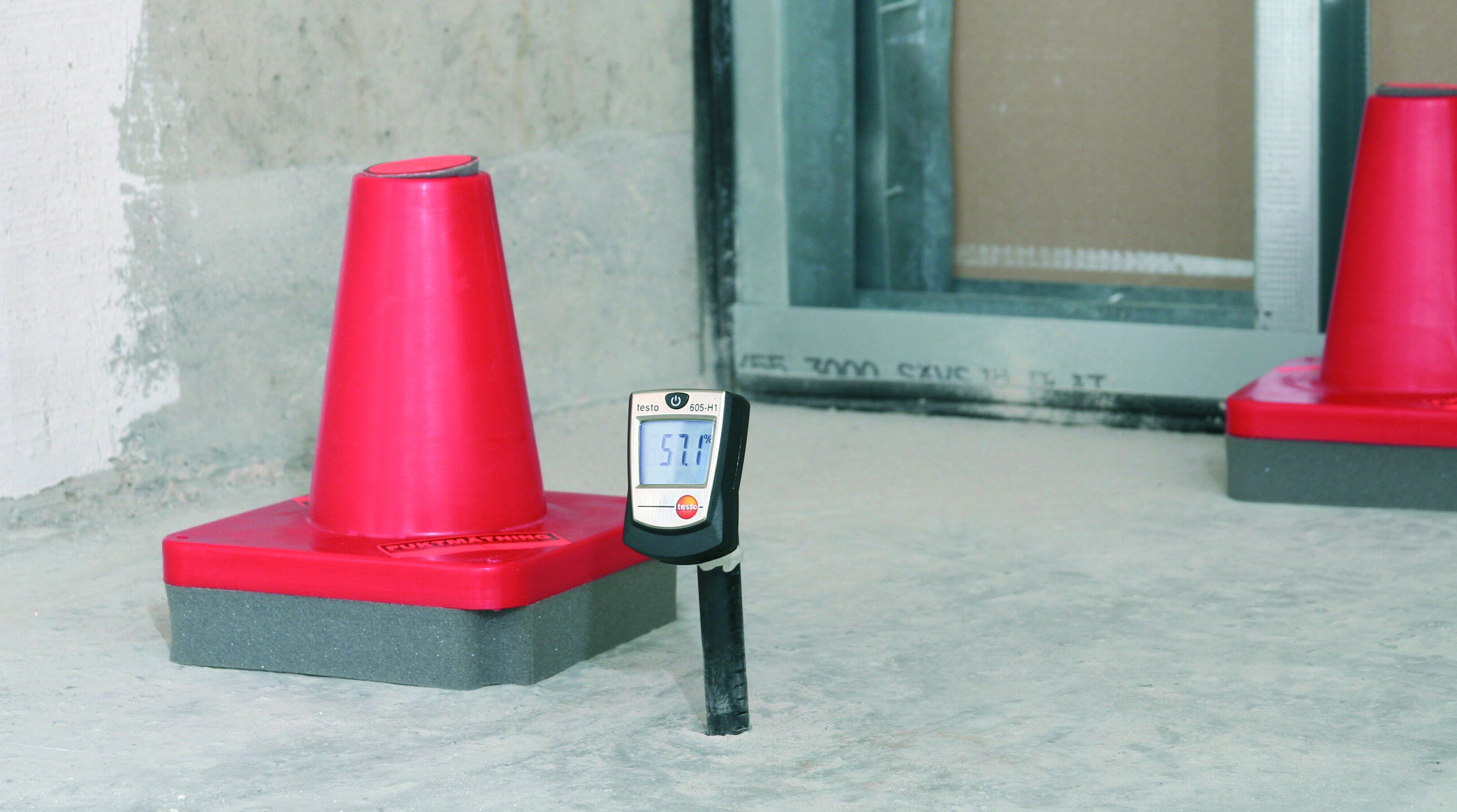
Measurement with testo 605-H1
testo 605-H1 measures relative humidity and temperature and is available in a complete measurement set with everything you need to follow the RBK method description.
See how to perform moisture measurement in concrete with testo 605-H1:

Directly connected measurement with Celsicom TH601A
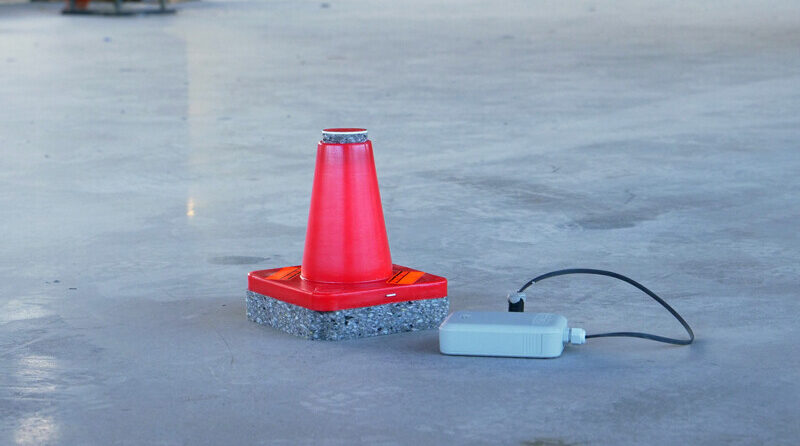
Celsicom TH601A logs moisture and temperature and makes it possible to monitor measurement values remotely. This way, you can follow developments over time without having to visit the measurement point for every reading. For measurements where the probe needs to be placed further from the logger, Celsicom TH611B with a longer cable probe is also available.
See how to perform moisture measurement in concrete with Celsicom TH601A:

Moisture in concrete
Application: Check the moisture level in concrete
Measurement solution: Moisture measurement set for RH determination in concrete with testo 605-H1 and Celsicom TH601A/TH611B
Contact persons

ADVICE AND SALES
Mats Landin
Area of responsibility: Construction, Ventilation and Air Conditioning
mats.landin@nordtec.se
031-704 10 85
031-704 10 70