


Published 2026-01-29
Airtightness – a key factor in house performance

The airtightness of a building affects everything from indoor environment and ventilation to moisture safety and energy use. Yet the importance of airtightness is often underestimated in house construction and renovation. To check airtightness, new buildings are usually tested with a Blower Door – a method that provides a reliable measure of the building’s total air leakage.
– “Airtightness is essential for a building to function as intended,” says Lars Tobin. He has worked with testing since the 1990s, including at SP (now RISE), and teaches airtightness and leak detection. In an interview with us, Lars explains how small leaks can have major consequences and why systematic measurements are crucial for a sustainable construction project.
Why is airtightness so important?
– A leaky house is not comfortable to live in. It often leads to draughts that reduce comfort and make it harder to keep energy use down. Comfort and energy go hand in hand. If you don’t have comfort, you don’t have good energy management,” says Lars.
But there is more to it than just energy optimization. Airtightness also affects moisture safety, fire safety and the quality of the indoor environment.
– Many people forget that it’s about fire safety, for example how easily a fire can spread between apartments. And about creating a clean indoor environment – you don’t want radon or other unwanted emissions getting in, or cigarette smoke from the neighbor. Airtightness is about human health and safety,” he explains.
A tight air barrier is essential to stop moist air from leaking into the structure and prevent condensation in cold parts of the house, which otherwise risks leading to moisture damage. During his many years in the construction industry, Lars has come across countless leaky buildings that suffered from moisture damage.
– Much of the moisture damage we see today could be prevented with the right knowledge and tools. Ensuring good airtightness avoids problems both during the construction process and in the long term. At the same time, airtightness affects how well the ventilation system works. In an airtight building, a larger proportion of the air enters through leaks instead of through the vents, making the ventilation flow difficult to control, especially in F-systems and to some extent in FT-systems.
When should the blower door test be conducted?
Air leakage is not always visible to the naked eye and without the right measurement method, critical leaks can easily be missed. For new construction or major renovations, the building is therefore tested with a Blower Door.
– It’s important to test the house at an early stage so that any shortcomings can be rectified. If you only discover problems after the internal walls are in place and everything has been plastered, it can be an expensive story to correct,” says Lars.
If deficiencies are found, it is always advisable to follow up with a new test after the measures to ensure that the desired result has been achieved. A Blower Door measurement shows the overall airtightness of the building, but to find exactly where the air is leaking, the test needs to be supplemented with leak detection. This can be done with a thermal imaging camera or smoke, depending on the season and prevailing conditions. A thermal imaging camera is useful when there are temperature differences between the indoor and outdoor environment. Smoke works all year round, but is a more time-consuming method.

Airtightness must be checked, no matter how confident you are in your own ability.
Lars Tobin
Construction consultant, trainer and airtightness expert
How to get reliable results
– Many people think that experience is enough to know when a house is airtight enough. But airtightness must be checked, no matter how confident you are in your own ability, says Lars. He recommends the following structured approach:
- Check drawings in advance – can you build airtight from the plans?
- Educate staff on site – awareness of all construction workers is crucial.
- Control during the construction process – have someone other than the builder carry out visual checks.
- Early-stage pressure testing – address any issues and retest to verify the results.
While conducting a blower door test is relatively easy, attention to detail is what ensures reliable results.
– Sealing all leaks that are not included in the pressure test is essential. It is important to pay attention to all the details: are the windows closed? Is it tight around the penetrations? Is there water in the floor drains? And if it’s too windy outside, the curves can be uneven and the measurement results uncertain. It requires accuracy and some experience not to miss anything,” says Lars.
During our one-day course in airtightness testing, Lars goes through practical testing with Blower Door, common sources of error and what is required to get reliable results. The course is included when you buy a Blower Door from us.
Airtightness testing as quality assurance
There are no rules on how airtight a building must be – only that it should be “as airtight as possible”. Lars therefore emphasizes that developers should set clear requirements for airtightness already at the planning stage, so that there are concrete benchmarks to follow throughout the construction process.
For him, airtightness testing provides more than a measurement. It is a tool to control the quality of the work and an integral part of the quality assurance of the construction project.
– Pressure tests serve as a verification of work quality. They help contractors to see if the building is of high standard, while ensuring it is safe to occupy and sustainable in the long term. The energy savings provided by an airtight building are just a bonus – the most important thing is people’s health and safety.
He concludes with advice for construction consultants and contractors:
– Consider airtightness as part of a systems approach. Set a clear requirement for airtightness, verify it with testing and leak detection, and see the connection between construction, ventilation and airtightness. This will result in a safe and sustainable building.
Get started with airtightness testing

Measurement kit: Blower Door 5100 & thermal imager testo 860i, including course
Complete leak test kit with blower door and thermal imaging camera. Retrotec 5100 is equipped with SmartCloth, which dampens the effect of wind and provides a reliable value even in windy conditions. In addition, our airtightness testing course is included.
Read more about Measuring set with Blower Door and testo 860i
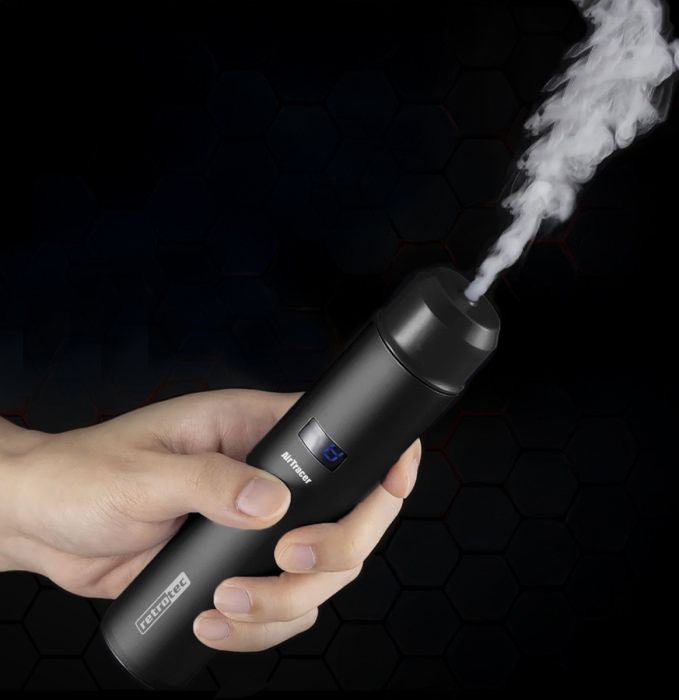
AirTracer smoke generator
A compact and easy-to-use smoke generator that helps you quickly and accurately identify air leaks in buildings. An effective tool for airtightness testing with Blower Door and duct tightness tests.
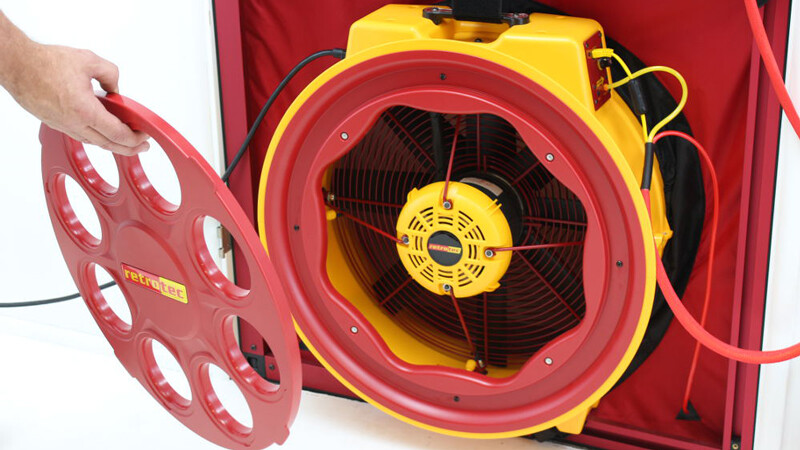
Airtightness testing course
Want to ensure that your construction projects are of the highest quality? Learn how to measure airtightness with Blower Door – together with expert Lars Tobin. During the course, you will get hands-on training, learn about common sources of errors and learn how to get reliable measurement results. Ideal for building consultants, contractors, inspectors, property managers and others who want to strengthen quality assurance and create safe, sustainable buildings.
When purchasing a Blower Door, this course is included.
Controlling air leakage in buildings
Application: Ensure airtightness in new construction and major renovations
Measurement solution: Test pressure with a Blower Door and additional leak detection with thermal imaging or smoke
Contact persons

CUSTOMER SERVICE AND SALES
Mats Landin
Area of responsibility: Construction, Ventilation, Climate control
mats.landin@nordtec.se
031-704 10 85
031-704 10 70