

Published 2026-11-04 2026-11-04 2026-11-04
Knowledge and control for safer food handling
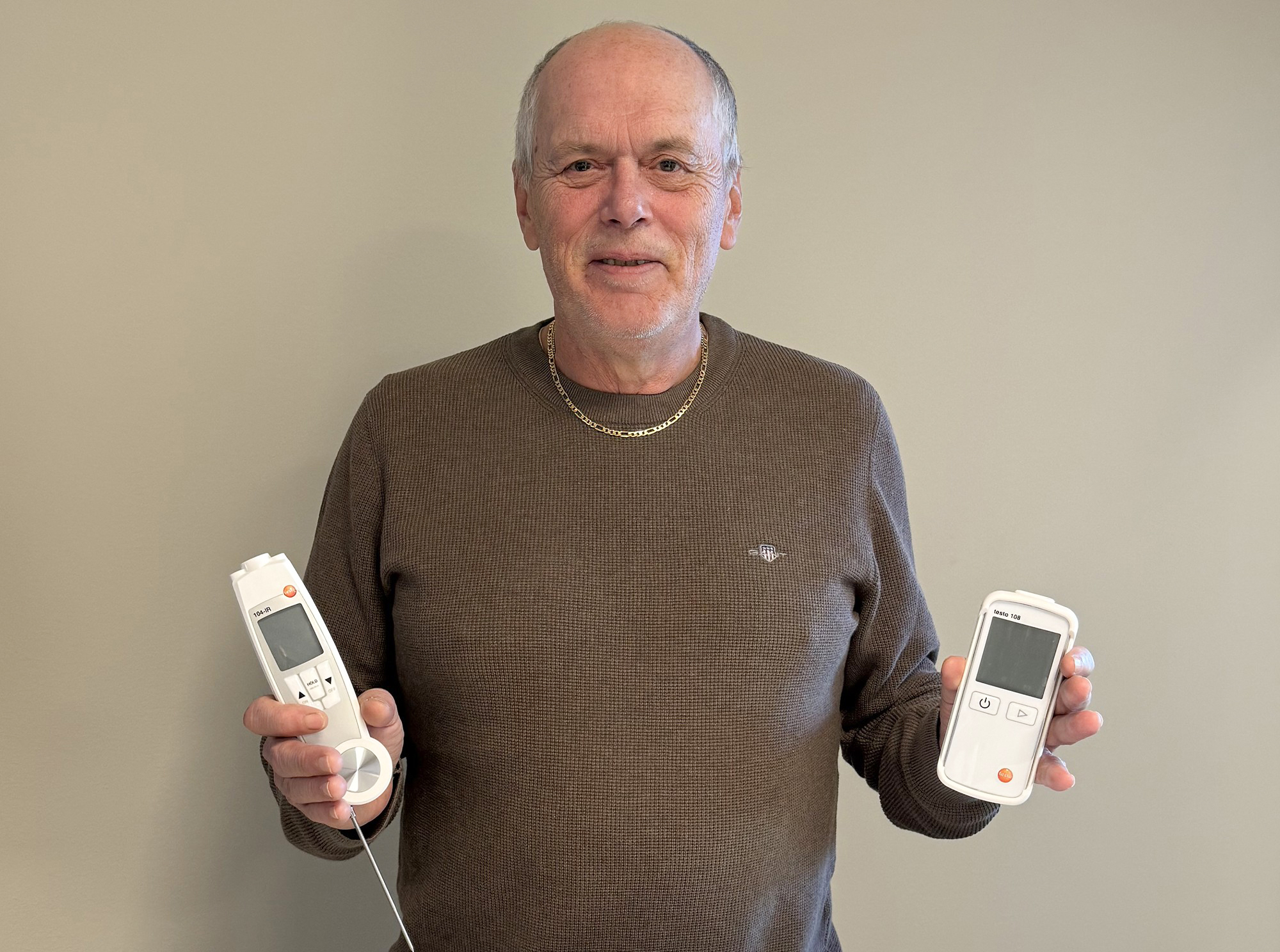
With around 45 years of experience in the food industry, Christer Ekberg has seen food safety from several perspectives. He has worked with everything from large-scale production to official food control. Now he wants to help others measure correctly, work safely, and elevate their businesses.
Measuring the temperature of food and its surroundings may seem simple. But how do you know the result can be trusted? Incorrect measurement values can cause problems with food storage and handling to remain undetected. If food is stored at the wrong temperature, food safety is compromised, which in the worst case can lead to people becoming ill. Lack of control can also mean that perfectly usable food must be discarded unnecessarily.
From production to inspection
Christer studied food technology at Lund University and subsequently began his professional career in the industry. For about 15 years, he held various management roles with responsibility for, among other things, large-scale food production.
He then moved on to official control and worked as a food inspector in Gothenburg and Varberg. He has also worked as a coordinator at the County Administrative Board.
– I have worked from farm to fork and seen many different types of operations. Conditions differ, and what is required to produce safe food varies from business to business, he says.
From his years in production, he remembers, among other things, the challenges of freezing. It could involve freezing hundreds of tons of food per hour. In such cases, it is not just about getting the products down to the right temperature, but also ensuring that the correct temperature is maintained all the way through packing, storage, and transport.
– Every process or treatment that a food item undergoes affects its temperature. Therefore, you need to have control throughout the entire chain, so that the product remains safe and you avoid throwing food in the bin unnecessarily.
Conditions can also change. A year with high rainfall can, for example, affect the water content in raw materials and thus the need to adjust drying times or temperatures. The temperature in the premises can also affect various processes. With the help of measurement data, it is possible to track how changed conditions affect the result and find opportunities to adapt and improve processes.
What does a food inspector look for?
When Christer later began working with food control, he saw how different businesses handled measurement and food safety. According to him, deficient equipment and insufficient knowledge of how the instruments should be used are recurring problems.
– It often happened that I went out to a business and asked for the thermometer, whereupon they returned after a while of searching with one without a battery. It is also common to read the temperature on a refrigerator display and believe that is sufficient as a check.
When inspecting a business, one looks at, among other things, how food is stored, how temperatures are controlled, and whether the business can demonstrate that it handles food in a safe manner. The knowledge of the staff is also central.
– I have seen both large and small businesses that work really well with food safety. What distinguishes them is that the staff knows how they should measure and why the measurement is needed. It is also about the will to develop and improve the business.
At the same time, knowledge can vary between employees and shifts. Routines that work when an experienced person is on site might not be followed in the same way by the next person. Therefore, it is not enough for a business to have good routines on paper. They also need to work in practice and be firmly established among the staff.
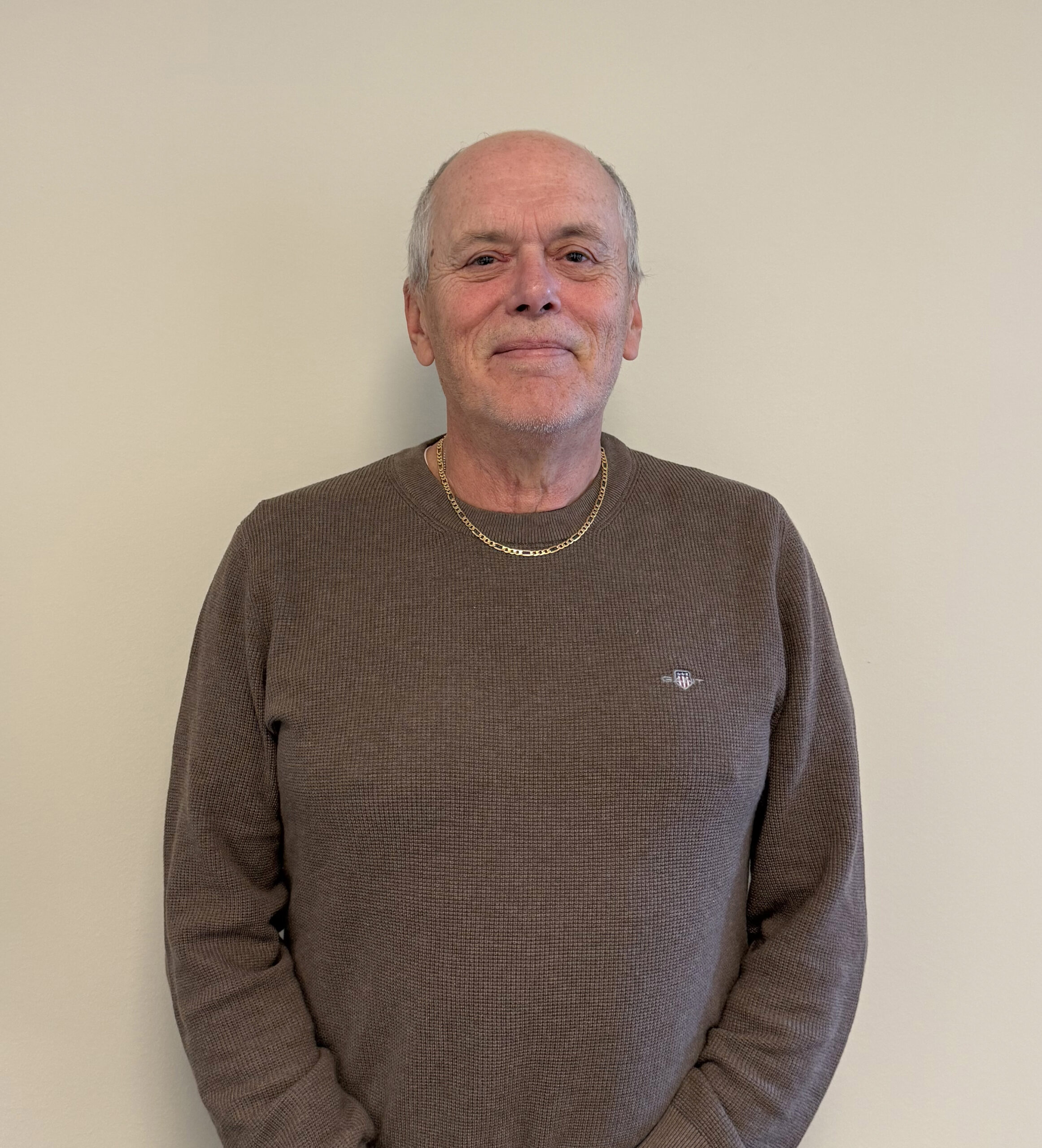
It is important to understand which measurements are critical in your own business.
Christer Ekberg
Food Engineer
How to get reliable results
How do you ensure that a measurement value can actually be trusted?
Christer emphasizes three things above all: knowledge, routines, and the right equipment. The instrument needs to be suitable for the specific measurement and used correctly. Furthermore, you must know where the risks lie.
– You need to work risk-based. It is important to understand which measurements are critical in your own business, what critical control points you have, and to have knowledge of how the measurements should be carried out.
As he sees it, measurement needs to be a natural part of daily work. Clear routines and the right conditions make it easier for staff to perform checks consistently.
Three tips for better food measurement
Based on his experience, Christer highlights three fundamental things to consider:
1. Ensure knowledge exists throughout the entire business.
Staff need to understand what should be measured, how the measurement should be carried out, and why it is important. Knowledge needs to be held by everyone who performs the checks.
2. Use the right equipment.
Choose instruments that suit the current measurement task and ensure they are used correctly. Equipment also needs to be calibrated regularly.
3. Create routines that work in practice.
Base them on the risks in your own business and ensure there is a plan for which checks are to be performed. Routines need to be easy to follow even when staff or workload changes.
Now he wants to help more people measure correctly
After many years in both food production and official control, Christer wants to continue working with issues related to measurement and food safety.
– As a food inspector, you can provide information on where knowledge can be found, but in that role, you don’t really have the opportunity to train businesses in how they should work. Now it feels rewarding to be able to help businesses in a different way.
Regardless of whether it is a restaurant, shop, warehouse, or food production facility, knowledge, equipment, and routines need to work together. For Christer, it is ultimately about giving businesses better conditions to work efficiently, deliver high-quality food, and achieve higher customer satisfaction.
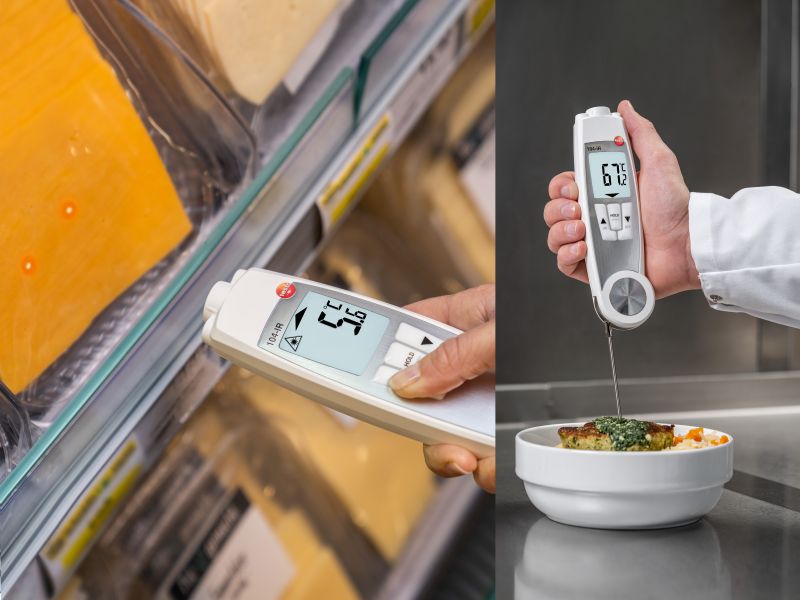
Find the right instrument for your food measurement
From goods reception and cold storage to cooking and serving – find measurement instruments that help you control and quality-assure food handling throughout the entire chain.
Safe food handling
Application: Ensure that food is handled safely and maintained at the correct temperature.
Measurement solution: Temperature measurement with adapted measurement instruments for monitoring food and storage environments.
Contact persons

CUSTOMER SERVICE AND SALES
Amanda Lööv Miljevic
Area of responsibility: Industry, Food, Life Science
amanda.loovmiljevic@nordtec.se
031-704 10 75
031-704 10 70